It’s one of the most common questions we get, and most people ask it the wrong way round.
They line up the price per square foot across all three, decide Palm Jumeirah is expensive and Dubai Marina is cheap, and make a decision on that alone. But these three communities aren’t the same product. Comparing them purely on price is like comparing a rental yield to a savings account and calling one better.
The right question isn’t which one is best. It’s which one does what you actually wantyour money to do.
01 — DUBAI MARINA
The income play
The Marina is the closest thing Dubai has to a blue-chip rental asset.
A one-bedroom typically sits somewhere around AED 1.1 million to 1.4 million and rents in the region of AED 75,000 to 95,000, putting gross yields in the 5 to 7% range depending on unit type. Studios tend to sit at the top of that range, larger units toward the bottom.
But the yield isn’t even the best part. The best part is depth. There are more tenants and more buyers active in the Marina than almost anywhere else in the city, which means two things that matter enormously: you can let it quickly, and you can sell it quickly. That liquidity is the most underrated asset in property. An investment you can exit easily is worth more than one that looks better on paper but takes six months to shift.
| Who it suits — the investor who wants reliable monthly income and a straightforward exit. |
| The catch — there’s a lot of stock and a lot of competition. Two towers a hundred metres apart can perform very differently. Building choice matters more here than almost anywhere. |
02 — JBR
The beachfront entry point
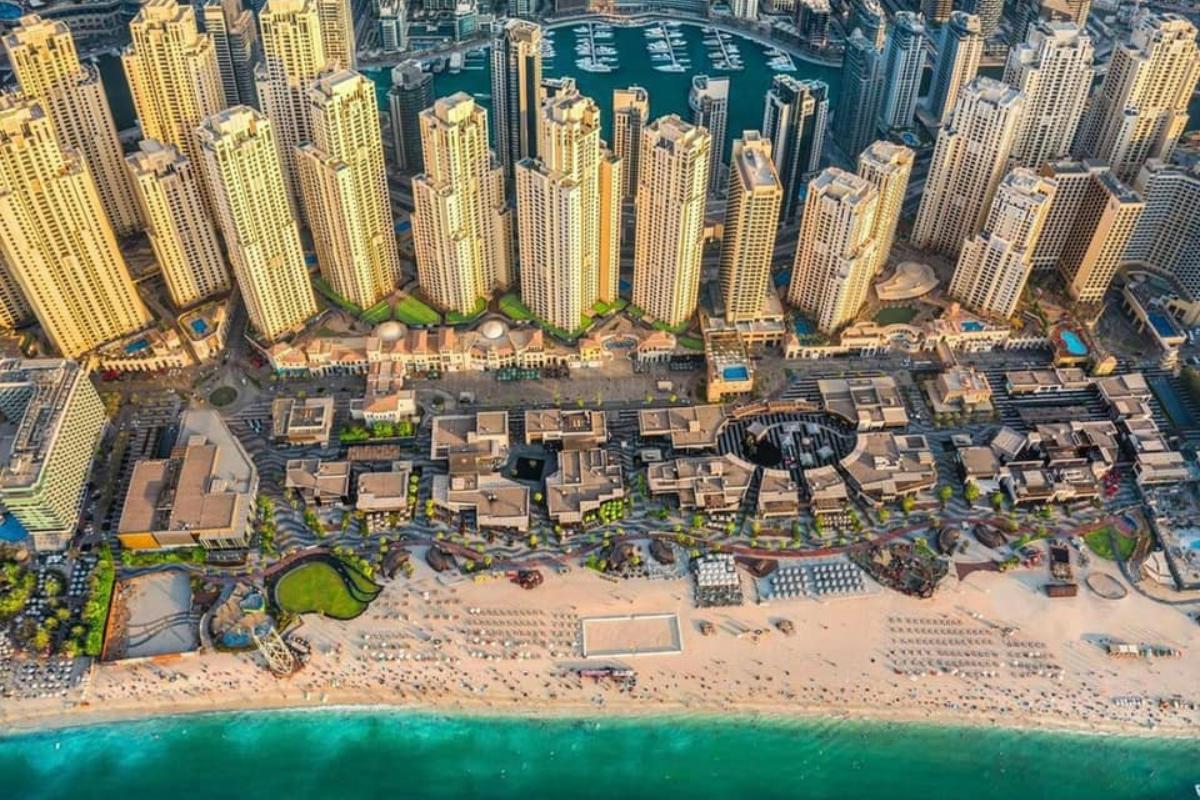
JBR is the most affordable realistic route to owning on the beach in Dubai, and that’s its whole appeal.
Older two-bedroom units trading around AED 2 million to 3 million represent genuine value for a beachfront address, and average rents in the community sit around AED 250,000 a year. The short-let and holiday-rental demand off The Walk is strong and consistent, which gives owners a second way to make the numbers work.
It’s also a mature, fully built community. There’s no more supply coming, no construction noise, no waiting to see how it turns out. What you see is what it is.
| Who it suits — the buyer who wants beachfront without Palm money, or an investor planning to run it as a short-let. |
| The catch — the stock is older and the service charges are higher, typically in the AED 12 to 24 per square foot range. If you don’t factor that in properly, your yield calculation is fiction. Do the sums on the real number, not the headline rent. |
03 — PALM JUMEIRAH
The capital play
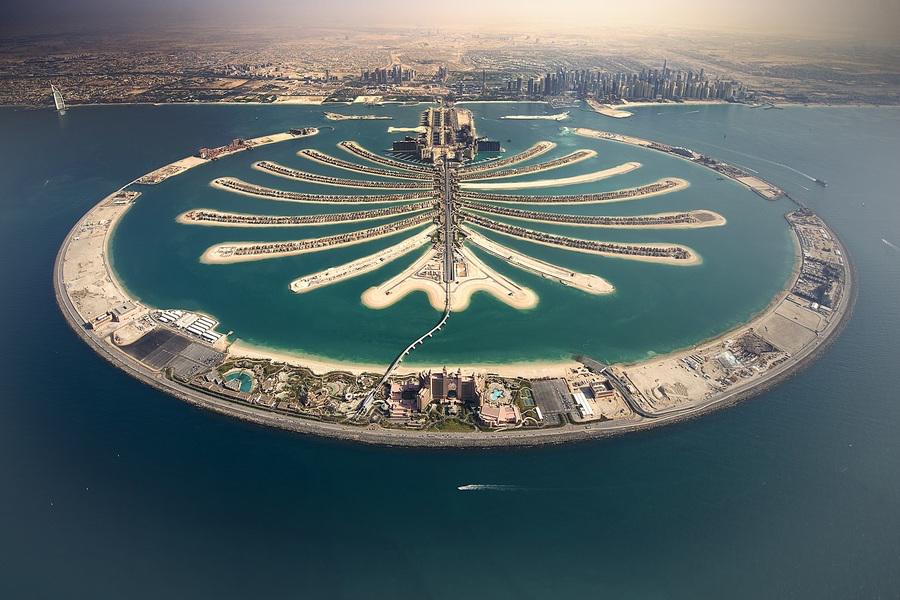 The Palm has the lowest yields of the three, generally 4 to 6%. Anyone buying it purely for rental return has misunderstood what they’re buying.
People buy Palm Jumeirah for scarcity. There is a fixed number of fronds and a fixed number of crescent units, and that has not changed and will not change. Every year Dubai grows, more people want in, and the supply stays exactly where it is. Values have responded accordingly, up around 14% year on year and sitting near AED 3,100 per square foot, with frond villas trading from AED 3,500 per square foot upward.
Some people will point to Palm Jebel Ali and say a second palm is coming. That’s true, and it actually reinforces the argument. Dubai is building another one because demand for this style of living is that strong. But Jebel Ali is many years from being a finished, mature community. Palm Jumeirah is complete, central, and has two decades of proven track record behind it. There will only ever be one of those.
| Who it suits — the long-term holder who wants capital appreciation and an address that can’t be replicated. |
| The catch — it’s a patience play. If you need the property working hard for you month to month, this isn’t it. |
THE TAKEAWAY
The simplest way to think about it
| IN ONE LINE
Marina pays you monthly. Palm pays you once, but it pays you big. JBR sits in the middle — beachfront lifestyle with a genuine rental engine behind it. |
None of these is the right answer on its own. The right answer depends entirely on your timeline, your appetite for risk, and whether you’re buying for income, for growth, or to actually live in.
If you want an honest view on which of the three fits your situation, and which specific buildings within them are actually worth your money, get in touch with me or one of my team at Liv Squared Properties.
Ashley.hawthorne@livsquared.com
We’ll give you the straight answer, even when it isn’t the one that earns us the bigger commission.